From “Show Me” to “Do It For Me”
In the high-stakes arena of global finance, information overload has long been the tax on doing business. For decades, we have operated in a “Show It to Me” economy – an era of search, retrieval, and the manual synthesis of mountains of data. However, 2025 has emerged as the definitive “wow” year for a new paradigm: the “Do It for Me” (DIFM) economy. This shift is fueled by Agentic AI – autonomous systems capable of multi-step reasoning, independent action, and “scalable cognition” that functions without constant human prompting.
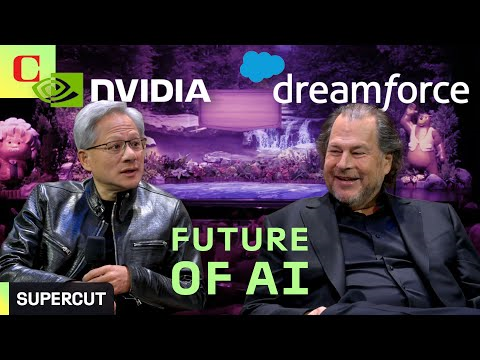
The strategic pivot is no longer a whisper; it is a roar. Mentions of “agentic AI” and “AI bots” by BigTech surged 17x in 2024, and the market is projected to skyrocket from $2.1 billion in 2024 to $81 billion by 2034. As Jensen Huang, CEO of NVIDIA, puts it, the progress over the next two years will be “spectacular and surprising.” We are moving beyond simple generative prompts into a world of “AI Factories” where the most counter-intuitive shifts are currently forcing an invisible restructuring of the entire industry.
Friction is No Longer a Business Moat
For centuries, friction was the business model. Entire professions – consultants, intermediaries, and lawyers – existed solely to help humans navigate complexity that was otherwise too opaque or slow to handle alone. These roles were structural responses to the limits of human cognition.
Agentic AI changes this equation by “absorbing” complexity rather than just simplifying it. It does not merely present a dashboard; it interprets and executes directly across fragmented systems. Consequently, business models built on managing procedural friction are facing a gradual erosion – not because they failed to perform, but because they are no longer necessary.
“Organizations built to absorb [complexity] may discover their role was more temporary than it appeared… Their role shifts from essential infrastructure to transitional scaffolding.” – ChangeGuild
The Rise of the “Infinite Capacity” Startup
The Agentic era is ushering in a “startup golden age” where the traditional relationship between scale and headcount has been severed. We are witnessing a terrifyingly efficient evolution: the internet era required massive capital expenditure (CAPEX) for infrastructure; the cloud era converted that into operational expenditure (OPEX); now, Agentic AI moves the economics from Employee Payroll to Software Subscription.
A two-person startup can now command an “infinite capacity AI agent army,” leveraging “Orchestrator-Worker Workflows” to automate repetitive mental tasks at speeds that dwarf global incumbents. This allows “Agile Incumbents” and lean FinTechs to scale reach without the weight of legacy headcount.
“Agentic AI moves the economics of entrepreneurship from employee payroll to software subscription. Digital banks and regulated FinTechs will be able to leverage their tech infrastructure and licenses to grow even faster than before.” – Huy Nguyen Trieu, CFTE
The “Digital Jarvis” and the End of Exclusive Personalization
Historically, high-touch services like private banking were the exclusive domain of the billionaire class. Agentic AI democratizes the “Digital Jarvis,” a super-competent colleague in every user’s wallet. Experts estimate that agentic commerce could create nearly $17.5 trillion in value for financial institutions by proactively managing consumer engagement.
This presents a strategic dilemma: Who owns the relationship? The bank, or the BigTech agent? To fight back, banks are exploring “AI Wallets” with capped autonomous budgets and “Automated Authentication Layers” to verify agent legitimacy. Citi identifies key wealth and retail use cases that are now becoming baseline expectations:
- Adaptive financial advice: Systems that adjust to real-time market behavior.
- Real-time savings goal optimization: Automated splitting of income for bills and investments.
- Custom lending offers: Tailored credit structures generated in seconds.
- Self-optimizing portfolios: Real-time rebalancing (valued by 48% of investors) to align with strategic goals.
The Security Arms Race – Deterministic vs. Agentic Defense
We are in the midst of a “spectacular and surprising” security arms race. Malicious bots already account for 50% of internet traffic, and deepfake scams – now up 2000% in three years – have crossed the “uncanny valley,” becoming imperceptible to the human ear. Traditional “deterministic” security is obsolete; defenders now require the MAESTRO (Multi-Agent Environment, Security, Threat, Risk, Outcome) framework to coordinate monitoring, assessment, and response autonomously.
| Feature | Traditional Security (Deterministic) | Agentic Security (Autonomous/Adaptive) |
| Philosophy | Rule-based; assumes static inputs. | Zero Trust; assumes dynamic environments. |
| Mechanism | Static firewalls and point-in-time alerts. | “MAESTRO” agents coordinating across layers. |
| Identity | Login/Password (Point-in-time). | Continuous Authentication (Gait, typing rhythm). |
| Response | Reactive; requires human intervention. | Proactive; autonomous threat isolation. |
Turning the Compliance Cost-Center into a Precision Engine
Compliance has long been a 95% “wasted effort” due to false positive ratios in AML and sanctions screening. Agentic AI is crushing this inefficiency by converting “thousand-page regulations into computer programs.” This creates a “data dividend” from cloud migration, allowing agents to Conduct real-time due diligence via 4,000 machine-learned features.
Hard ROI is already visible: institutions are seeing a 23% improvement in touchless continuous close processes and a 30% better cycle time for AP/AR. Consider the Napier AI case study: a Fortune 500 company (one of the world’s most valuable as of July 2025) implemented real-time transaction screening in just one week. This allowed them to launch a product forecasting $100+ billion in revenue with zero analyst review required by design.
“The scope and volume of sanctions alerts has rocketed… Focusing on far better data collection and machine learning to identify true positives can save massive amounts of time and money.” – Simon Taylor, Sardine
The “Programmable” Loan and the Death of the PDF
The final nail in the coffin for friction-based lending is the shift from static PDFs to “Agentic Contracts” and the Unified Lending Interface (ULI). Unlike a document, an agentic contract is a living entity with an “Onboard Data Vault” that allows it to be algorithmically valued in real-time.
In maritime finance, an agentic contract can monitor a ship’s GPS; if the vessel enters sanctioned waters, the contract autonomously triggers risk mitigation before a violation occurs. This AI-first credit decisioning leads to:
- 70–90% increase in overall decisioning speed.
- 50% increase in automated approvals.
- 10–25% reduction in loss rates through predictive financial modeling.
Conclusion
We have transitioned from an era of manual “Cognitive Work” to one of “Scalable Cognition.” The implications for the workforce are profound: professionals will soon find themselves no longer managing humans, but managing a fleet of “worker agents.”
As we look toward 2026, the industry faces a choice between the “Golden Age of the Practitioner,” where small teams wield infinite capacity, or a “Coming Intelligence Oligopoly” dominated by those who own the underlying models. The risk is not an immediate collapse of traditional banking, but a gradual erosion of any model that still relies on friction to generate value. In the DIFM economy, banking must be invisible, agentic, and always-on – or it will simply cease to be relevant.
Further Readings